

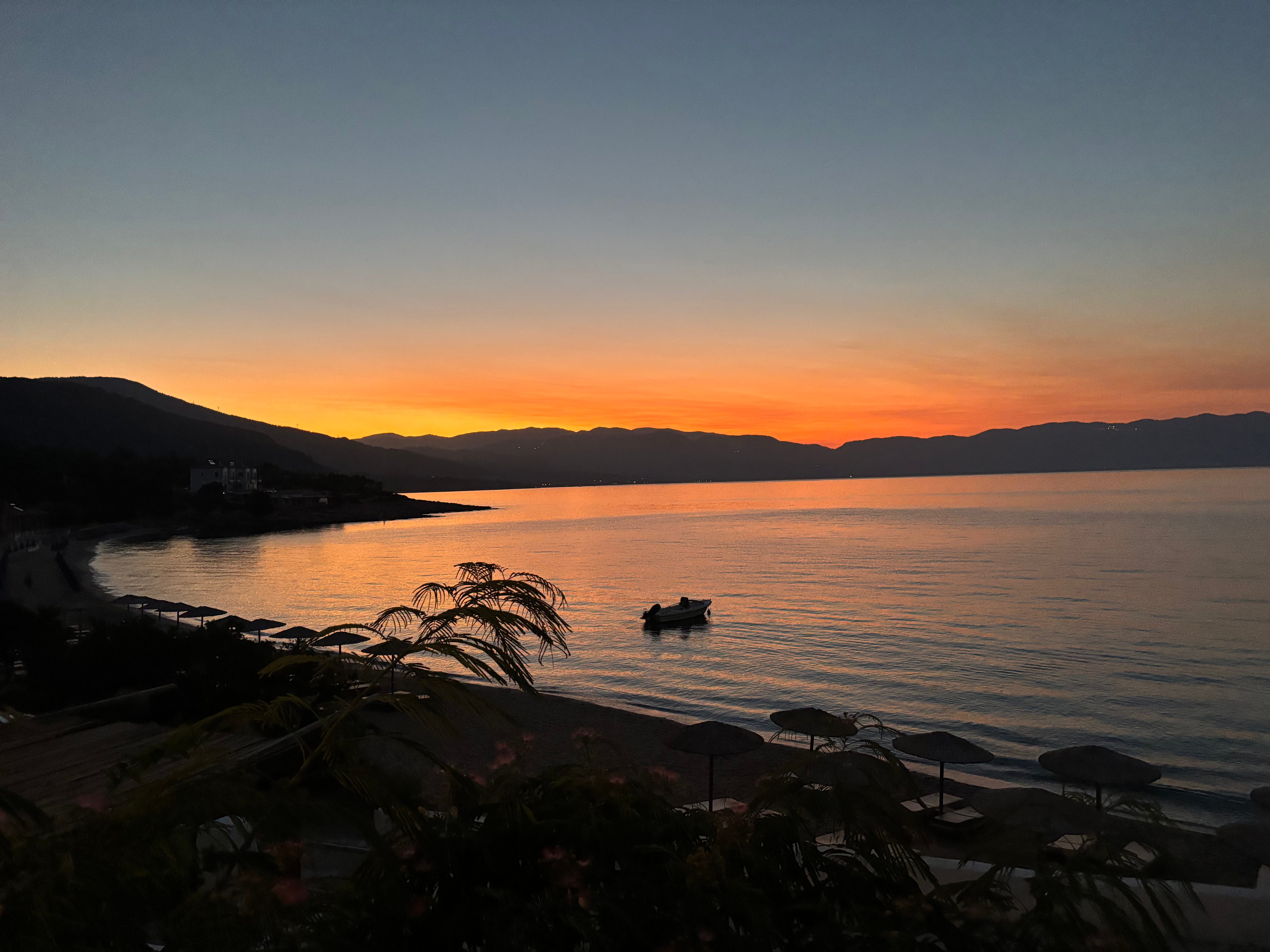
In late July, within the span of a week, I applied to a master’s program in the humanities, received an acceptance five days before it started, packed up my San Francisco apartment, and flew to a small island in Greece for two months of studying Ancient Greek. This was the latest in a series of self-induced upheavals this year: two months earlier, I decided to take a sabbatical from a job I loved, driven by the sense that I had to distance myself from the tech scene to think — that my mind was so suffused by the day-to-day turbulences of tech discourse, so gripped by the unrelenting urgency that pervades the industry, to properly contemplate the matters of ultimate concern that I had always sought to understand.
This was, admittedly, an incredibly impractical decision: to leave a good job in a consequential industry, at the cusp of what many claim to be our impending “AGI” era, to study a “dead” language at a fledgling college. But I felt that, to understand how we ought to live today, I had to turn to the long tradition of seeking to answer these questions: Who are we? Where did we come from? Who do we seek to become?
I had initially applied to graduate programs seeking intellectual camaraderie and a sheltered space in which to read and write. I did not know whether learning Greek would aid that; admittedly, I was somewhat concerned that it would be an initiation into a pretentious, rarified class of academics more occupied with linguistic minutiae and abstract debate than the real, urgent problems of the world. At the very least, I thought, I could learn the etymologies of words I loved, and, at some point, read Aristotle in the original.
But the two months there, and the process of learning Ancient Greek, were transformative in ways I still struggle to articulate. When friends asked about the experience, the only truthful descriptor I could conjure was “intense”: intellectually, physically, psychologically, spiritually. I did not enjoy every moment of it — there were many times when I longed to leave — but I have loved it. It was a period devoted to “difficult pleasures,” to borrow from Harold Bloom, that has helped me understand what an education can be — really, what an education is for — and how it is not so separate from what it means to live.


The program began on the island of Samos, the birthplace of Pythagoras and the goddess Hera. We studied and slept mere steps from the Aegean Sea, whose cool, placid waters offered a welcome reprieve from the scorching sun and demanding studies.
Our studies consisted of both Ancient and Modern Greek: four hours of the former in the morning, and three hours of the latter in the afternoon, with an equal amount of expected independent study time. In contrast to many classics programs, we treated Ancient Greek like a living language, to be spoken conversationally1 rather than merely translated. It was also taught, which essentially meant a firehose of Greek from day one, with little to no English spoken in class and lots of pantomiming.
Given my buzzer-beater acceptance, I had not completed the two months of required pre-studying, and was essentially illiterate. At first, learning Greek felt like desperately pawing at a slick, slippery slope, trying to find something to grip onto as a torrent of words cascaded upon me. I remember breaking down in tears the second day of class, distraught and humiliated by my inability to understand or express myself. I felt like an infant, desperate to make sense of my surroundings and to make myself understood.
Part of the psychological challenge of the program was to learn to be comfortable with sitting in a perpetual state of confusion and unknowing. In fact, our teachers said that if we could understand 50% of what was happening in class, we were in a good place. They encouraged us to let the language wash over us, as if we had been dropped into the ocean and were learning to swim. If we panicked and floundered about, we would waste our energy and drown; but if we remained calm, did not fight the current, and focused on staying afloat with each successive wave, the waves would carry us to shore.


The theory behind this immersive approach is that much of language learning comes from hearing the language over and over, and letting our subconscious mind pattern-match (as it naturally does), rather than treating it as a methodical, mechanical act of memorizing grammar charts. Of course, we used classic language-learning resources like vocabulary flashcards and grammar exercises, but it was fascinating to observe how patterns of sound could stick to our subconscious mind after hearing something over and over dozens of times. We had to learn to luxuriate in the beauty of the language and let it slip into our ears without trying to grasp and interpret all of the words.
I had always found academics to be an exercise in brute force: it didn’t matter whether I found a subject beautiful so long as I could cram my brain with information to regurgitate onto a test. But with Greek, I found that I had to cultivate a sense of joy and play. If I remained stricken by terror, I would be so occupied by what I did not know that I would fail to recognize and build upon what I already knew. Our professor encouraged us to pick the lowest-hanging ripe fruits available to us, rather than try to reach for concepts and words we were not yet capable of comprehending. He told us that we can only learn what we know, meaning that we must feel something in our bones before we can understand it intellectually. The intellect, he said, is often a barrier to knowing.
By the second week, once I could recognize some words and grammatical patterns, it felt like I had gotten a handhold on a craggy cliff, and could do the difficult but doable work of clawing my way up. I recall one moment, while working on flashcards, I startled myself by blurting out a vocabulary word even before I had time to think. The word had wormed its way into my head and could be summoned almost reflexively, without my conscious mind having to search for and dig it out. The language was becoming embedded within me; I was being changed.
Studying Greek was a training in a different quality of attention: learning through pleasure, not through force. It ran counter to everything I believed about what it meant to be a “good student”: not one who could strong-arm one’s will, but one who could nurture a deep love of the subject and be moved by it.
The French philosopher and mystic Simone Weil wrote that “the development of the faculty of attention forms the real object and almost the sole interest of studies.” What she meant by attention was not an act of muscular exertion or an exercise of the will, but a “negative effort” sustained by joy in the work. It requires a patient, almost passive, receptivity toward truth: to wait rather than seek, to receive rather than grasp.
In this way, I came to see that the primary purpose of our two months in Greece was not to learn the language itself, but to learn to love the world it opened for us. Greek and the great texts were simply means of paying deeper attention to the world, and of understanding it, and ourselves, in new ways.
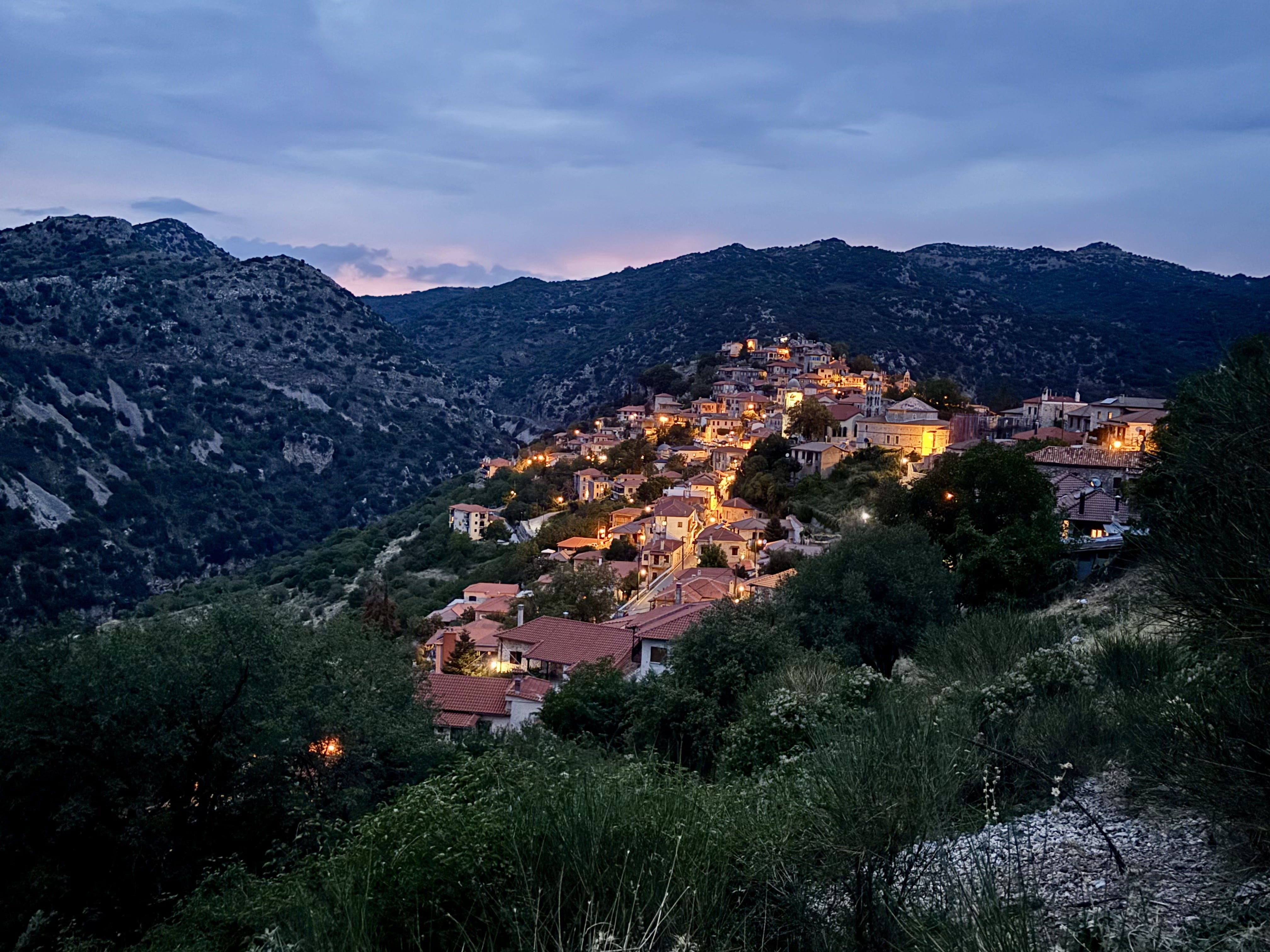
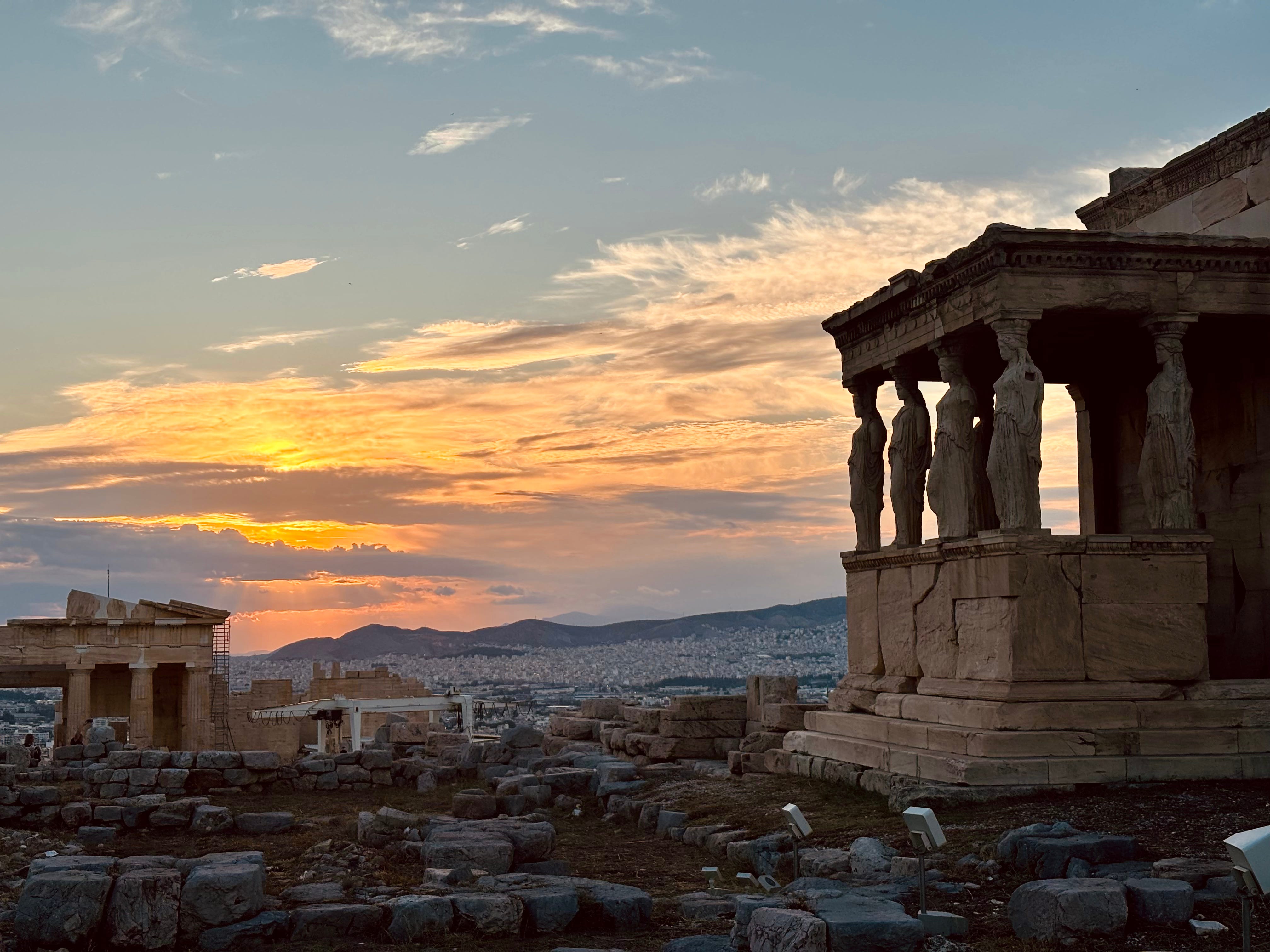
Over the two months, we traveled around the Greek world: Samos and Patmos; to Ephesus and Istanbul in Turkey; then to the Peloponnese, where we stayed in the mountainous village of Dimitsana. We hiked to monasteries embedded in cliffs, and read Greek texts perched on ancient ruins. We imbibed Greek culture through all our senses: learning Greek dances; singing Greek hymns in churches and caves; consuming wine, honey, and olive oil produced by the land around us; swimming in Homer’s wine-dark sea under a canopy of glimmering stars.


Toward the end of our time on Samos, we visited a small family farm in an abandoned mountain village. As the farmer served us natural wine and moonshine from the vineyards, with tomatoes and cucumbers from their garden sprinkled with oregano foraged from the mountains, he told us how the process of harvesting grapes by hand allows the vines to reveal their character to him. That careful attention to every vine reminded me that we humans, too, have an essence that unfolds in the attention of others.
Attention of this kind allows for love. To love is not to admire something at a distance, but to engage with it deeply, to seek to understand, to continue to be curious about its many layers of truths and their gradual revelation. It is to care about something even when doing so brings no immediate benefit.
In Istanbul, we visited the Byzantine Basilica Cistern. It was never meant for public view, yet is incredibly beautiful and still stands beneath the city fifteen centuries later. Its builders lavished their attention on a water system few would ever see. What might we learn from a culture whose reverence for beauty touches even the most utilitarian parts of their lives, and whose love extends beyond their lives, their generation, even their civilization?


The day before our classes started, we climbed the western slope of Mount Kerkis to a cave. Inside, our professor delivered a lecture on the symbol of caves in Greek culture, which were seen as a respite from society to access deeper truths and encounter the divine. But one cannot remain in the darkness of the cave forever, but must return to society to share the truths encountered within with others.
In a way, this program feels like a cave for me — a retreat from my old life to seek truth. Now, I am about to begin the second term in Savannah, Georgia, where I will be until May. What truths will be unveiled here, I do not yet know; but I have a suspicion I will reemerge transformed.
We also use the Modern Greek pronunciation, not Erasmian.
A fascinating article on academic immersion. If you live the life and think the thoughts and attempt to connect with the basics of communication you are learning in every way. Not just by what can often be an attempt to assimilate the dry bones of a subject but by becoming the absorber of a life that flourished, ate and drank and danced and caroused and pulsed with the stuff of intimate existence. I loved your post.